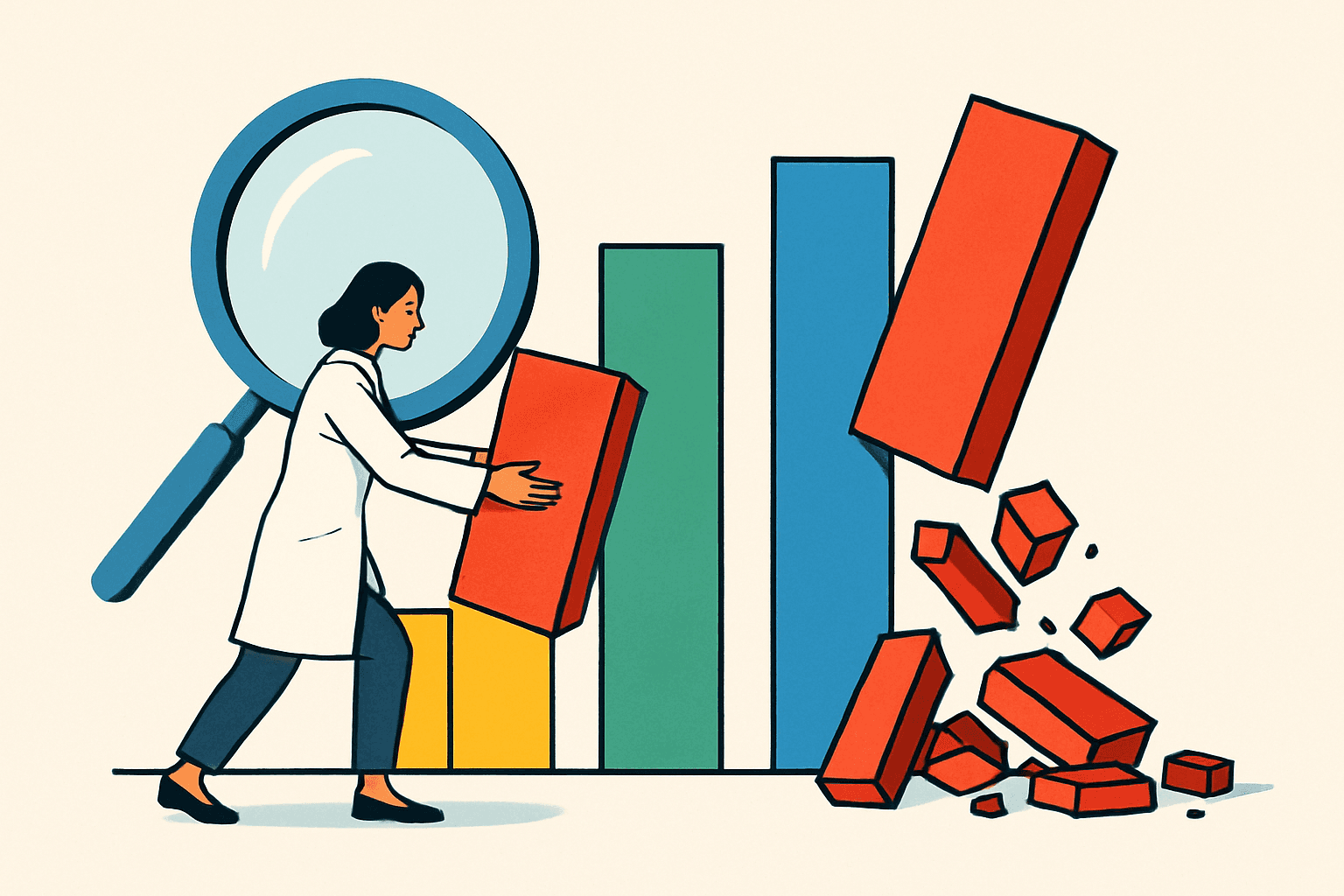
In 2015, a team of 270 scientists attempted to replicate 100 published psychology studies. They were able to reproduce the findings in approximately 36 of them. This number landed like a small explosion in the scientific community and a large explosion in the media. Headlines declared that science was broken, that psychology was fraudulent, that you couldn't trust research at all. Most of these responses were wrong in a very specific way, they identified the smoke and misidentified the fire. The problem was not that science had failed. The problem was that science was working, and what it found was uncomfortable.
What the Crisis Actually Is
The replication crisis is not a crisis of method. The scientific method includes falsifiability, replication, and peer review, and those mechanisms found the problem. What it's a crisis of is the publication system, the incentive structure, and the culture of overconfidence that grew up around them. Journals, for decades, preferred novel positive results over replications or null findings. Researchers, whose careers depended on publication, had strong incentives to find positive results and present them confidently. P-hacking, running multiple analyses until significance is achieved, became widespread not because scientists are bad people but because the system rewarded it.
The result was a literature full of findings that were statistically significant but not robustly true. Effect sizes were inflated. Sample sizes were small. Many studies were run once, in one location, with a specific population, and the results were written up as if they were universal laws. The overconfidence was not primarily individual. It was structural.
The Correction Working
Here is the part that got less coverage: the discovery of the replication problem was itself a scientific achievement. A team of scientists designed a study to test the robustness of published findings and published the result, including the uncomfortable numbers. This is not what you'd expect from a broken discipline. It is exactly what a functioning one looks like. The findings were criticized, extended, partially rebutted, and engaged with, through the mechanisms of science. The pre-registration movement, which requires researchers to log their hypotheses before collecting data, emerged from the crisis. Open data requirements followed. Replication studies became more publishable.
Medicine and economics and other fields looked at the psychology findings and started examining their own literature, finding their own replication problems, and implementing their own reforms. The crisis is real; the response to it is substantially correct; the media interpretation, that you can't trust research, is a misreading of what "can't trust" should mean.
You should trust robust, replicated findings with large effect sizes from pre-registered studies with open data significantly more than single studies with p=0.049 from 2008. The replication crisis has given you better tools for making that distinction. That's not a crisis. That's a field growing up.
The lesson of the replication crisis is not "don't trust science." It's "trust the process, be sceptical of any individual result, and insist on the infrastructure that makes self-correction possible."
Disagree? Say so.
Genuine pushback is welcome. Personal abuse is not.
Related questions


