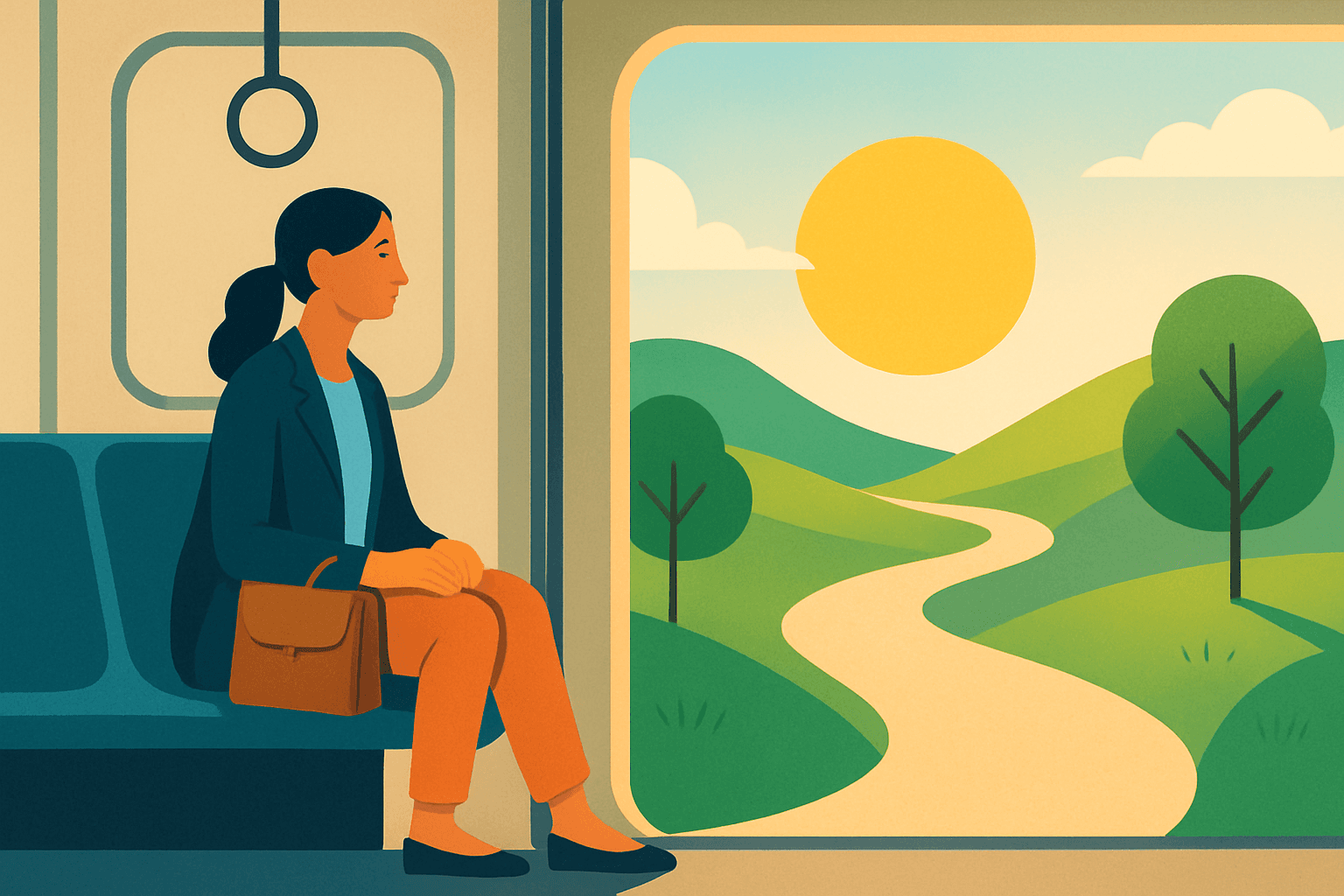
When remote work expanded dramatically in 2020, the commute was one of the things people were most relieved to lose. Hours back. Stress gone. No more sardine-packed trains or morning traffic. It was presented as an obvious and unambiguous good, and most people treated it as one.
Several years on, the picture is more complicated. Not because the commute was secretly fine, it often wasn't, but because something was lost along with it that people hadn't expected to lose.
What the commute was actually doing
The morning commute served a function that had nothing to do with transport. It was transition time, a forced psychological gap between the domestic self and the professional self. On the way to work, you shifted modes. Your focus moved from the morning's domestic chaos to whatever the day held. The space, however uncomfortable, was doing cognitive work.
Research on what psychologists call "role transitions" finds that people who have a clear boundary between home and work roles tend to experience lower stress in both contexts. The commute, involuntarily, created this boundary. It was the cost of the ticket, but the ticket was for something.
The thinking-nothing time
There is a specific feature of the commute that doesn't survive analysis of whether it was "wasted" time. Much of it was spent doing essentially nothing: staring out of a window, listening passively to music, letting the mind wander. This is, as it happens, exactly the condition under which the default mode network activates, the brain state associated with consolidating memories, processing emotions, generating creative connections, and integrating the self.
We have systematically replaced this with stimulation. The smartphone filled the gap that the commute had created. Instead of thinking-nothing, commuters now scroll, read, listen to podcasts, answer messages. These are not relaxing activities in the relevant sense. They are input. The processing time has been converted into consumption time, and the cognitive benefits of doing nothing have evaporated.
The class dimension
A necessary complication: the commute as secret benefit is much more plausible for commutes of a certain character. Forty minutes on a train with a seat and a coffee is a different experience from two hours of overcrowded buses standing in the heat. The evidence for transition-time benefits applies most cleanly to the former. The evidence on the latter, from studies of long commutes and stressful ones, is consistently negative: long commutes reliably reduce life satisfaction, particularly for those who can't read, work, or exercise during them.
So the argument is not that the commute was good. It's that the specific function the commute served, enforced transition, enforced boredom, forced physical separation of domains, was more valuable than was apparent, and that many people eliminated both the bad and the good simultaneously without realising the good was there.
Replacing what was lost
The more useful conclusion is not that we should bring back the commute, but that we should be deliberate about recreating the functions it served. A walk before opening the laptop. A fixed start and end time that doesn't drift. A physical space that is not the bedroom. The transition time doesn't require the train, it requires the transition.
Most people working remotely have not built this deliberately. They have the time back, and they've spent it working more hours in a more diffuse, less boundaried way. The commute's departure was a gift that came without instructions, and many people have been quietly worse off without knowing why.
Disagree? Say so.
Genuine pushback is welcome. Personal abuse is not.
Related questions


