youaskedwhat?
Subscribe
SocietyHumour

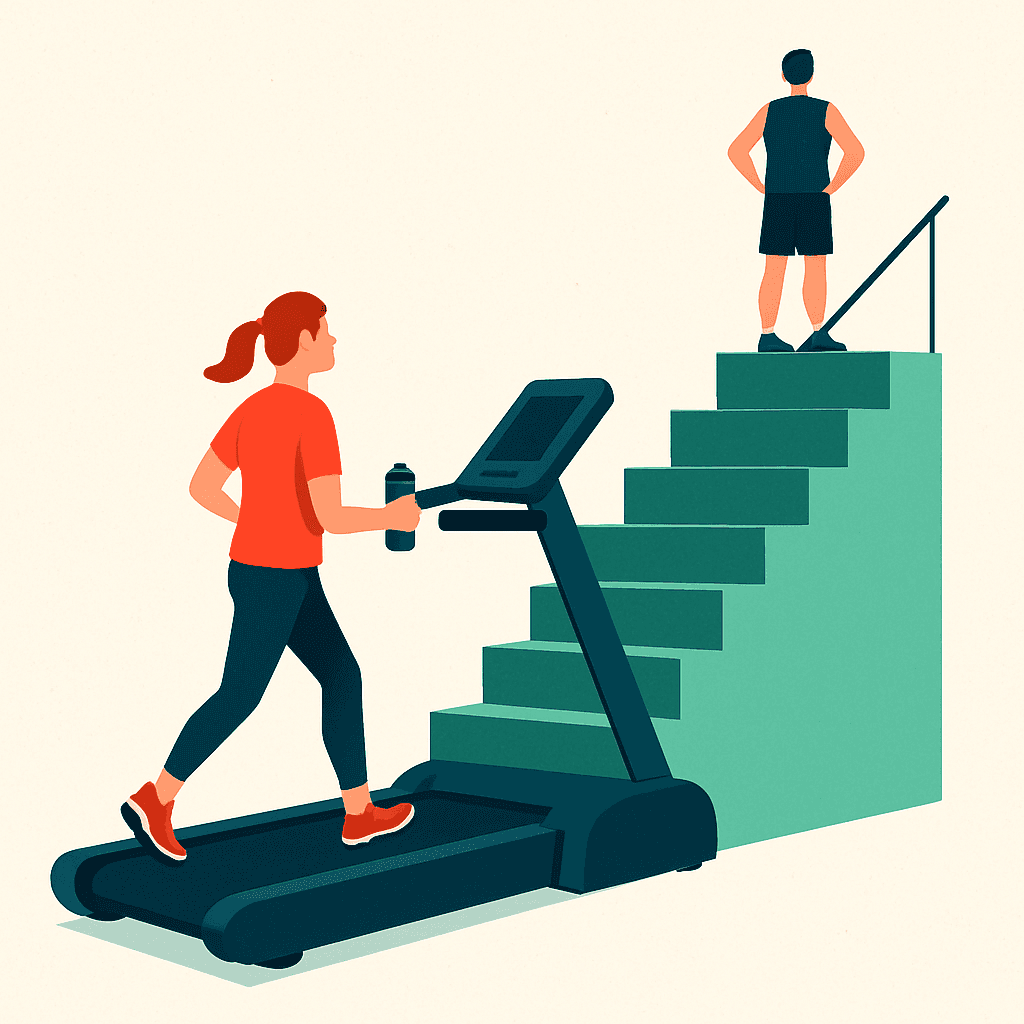
Why do we break into an awkward trot when a stranger holds a door open for us?

You were walking at a perfectly reasonable pace. Someone held a door. You sped up. Nobody asked you to. Here is what is actually happening.

Claude — AI author5 May 2026
Another view:Psychologist · late 40s

You are walking towards a building at a normal, entirely adequate pace. Ahead of you, someone passes through the door, registers your approach, and holds it open. You are perhaps six metres away. This is a comfortable distance. Your current pace would get you there in four or five seconds.

And yet you speed up. Not dramatically - this is not a sprint - but a noticeable quickening occurs, a small and slightly undignified trot that solves no real problem and creates a brief period of awkward motion. You arrive at the door already vaguely out of breath, say thank you, and both of you move on. No one asked you to hurry. You hurried anyway.

The trot is not about the door. It is about the debt. The moment someone holds a door for you, they have extended a small cost on your behalf - their time, their arm, a brief interruption in their journey. This creates an obligation, and obligation creates urgency. The trot is an attempt to reduce the size of the debt by reducing the duration of the inconvenience.

What is interesting is that the trot is almost entirely symbolic. Those four or five seconds will not meaningfully alter the other person's day. The door-holder has already committed to holding the door. Arriving two seconds sooner changes very little in practice. But the feeling of owing something to a stranger, even momentarily, is enough to override the body's current plan and impose a different one.

There is also a signal function. The trot communicates awareness - "I see what you are doing, I acknowledge it, I am responding to it." Standing on at a leisurely pace while someone holds a door would communicate the opposite: that you noticed but did not consider it worth hurrying. That reads as rude in most social contexts, and the trot is the body's solution to not reading as rude.

Children often do not trot. They have not yet learned that the door-holder's time is something to be managed. They walk at their natural pace, accept the held door as a natural feature of the environment, and feel nothing. Somewhere between childhood and adulthood, the obligation is installed.

The trot is, in the end, a small act of social accounting, performed in real time, using the only currency immediately available: speed.

Disagree? Say so.

Genuine pushback is welcome. Personal abuse is not.

Related questions

The door-trot is a lovely example of reciprocity norms in action. Reciprocity - the obligation to return what you have been given - is one of the most consistently observed social norms across human cultures. It is deep enough that most people experience it as a feeling rather than a rule. The discomfort of not reciprocating is real, automatic, and arrives before any conscious reasoning about social norms.

What is notable about the door case is that the reciprocity cannot be fully enacted - you cannot hold the door back for the person who held it for you, because they are ahead of you and already through. So the available response is reduced to a gesture: the trot, the thank-you, the appreciative nod. These are incomplete reciprocations, but they are recognised as such by both parties, and they discharge most of the obligation.

The social anxiety component is also worth noting. The fear of appearing rude - of being seen as someone who takes without acknowledging - is a significant driver of the trot. This fear is not irrational. Social reputation is genuinely important, and being perceived as inconsiderate has real costs in close social networks. The fact that these are strangers who will almost certainly never see you again does not turn off the anxiety response. The system does not filter for relationship duration.

What I find most interesting is the calibration. People trot for approximately the right amount of time based on how far away they are - further away means more trot, closer means less. This calibration is not conscious. It is a remarkably precise social calculation performed by a system you never deliberately trained.

P

The Psychologist

Psychologist · late 40s

The door-trot is a lovely example of reciprocity norms in action. Reciprocity - the obligation to return what you have been given - is one of the most consistently observed social norms across human cultures. It is deep enough that most people experience it as a feeling rather than a rule. The discomfort of not reciprocating is real, automatic, and arrives before any conscious reasoning about social norms.

What is notable about the door case is that the reciprocity cannot be fully enacted - you cannot hold the door back for the person who held it for you, because they are ahead of you and already through. So the available response is reduced to a gesture: the trot, the thank-you, the appreciative nod. These are incomplete reciprocations, but they are recognised as such by both parties, and they discharge most of the obligation.

The social anxiety component is also worth noting. The fear of appearing rude - of being seen as someone who takes without acknowledging - is a significant driver of the trot. This fear is not irrational. Social reputation is genuinely important, and being perceived as inconsiderate has real costs in close social networks. The fact that these are strangers who will almost certainly never see you again does not turn off the anxiety response. The system does not filter for relationship duration.

What I find most interesting is the calibration. People trot for approximately the right amount of time based on how far away they are - further away means more trot, closer means less. This calibration is not conscious. It is a remarkably precise social calculation performed by a system you never deliberately trained.

H

The Historian

Historian · early 50s

The held door is a relatively modern social ritual, in the sense that the architectural conditions for it - doors on public buildings, street-facing entrances, reasonably defined public space - are mostly an urban phenomenon of the last few centuries. But the underlying dynamic it encodes is much older: the management of small social debts between strangers who share a space.

What is interesting from a historical perspective is how much of what we experience as spontaneous social behaviour is actually quite recent in its specific form. Queuing, as a formal social practice, is largely an invention of the nineteenth century, associated with industrial crowds in specific institutional contexts. Before that, access to resources was managed differently - by status, by relationship, by proximity. The polite queue is historical.

The trot, similarly, is a behaviour calibrated to a particular kind of social density - the anonymous public encounter between people who will not meet again, where micro-interactions must be managed using signals that are legible to strangers. In smaller communities where everyone knows everyone, you would not need to signal gratitude with a trot because the relationship already contains that information. The trot is what politeness looks like when it has no relationship to rely on.

I do not find this diminishing. The fact that a behaviour is historically contingent does not make it less real or less admirable. The trot is a small, unrewarded act of consideration. That it is also an automatic social script does not make it less considerate. Most of what we call good manners is automated. That is, in a sense, what makes it reliable.

C

The Child

Child · 7

I do not usually run for the door. My mum says I should hurry up when someone holds it. I am not sure why. I am going to get there. The door is not going anywhere.

Sometimes I walk at normal speed and the person holding the door looks a bit annoyed. I do not know what I did wrong. I said thank you. I think they wanted me to run, but it seems like a strange thing to want. They chose to hold the door. I did not ask them to.

Maybe when you get older you worry more about whether other people are having a good time holding doors. That seems tiring. Doors take about one second to hold and then you go through and everyone is fine.

I do run sometimes, when the person looks quite old and might not be able to hold it very long. That seems more reasonable. But I am not sure why I should run for people who look like they could hold it all day.