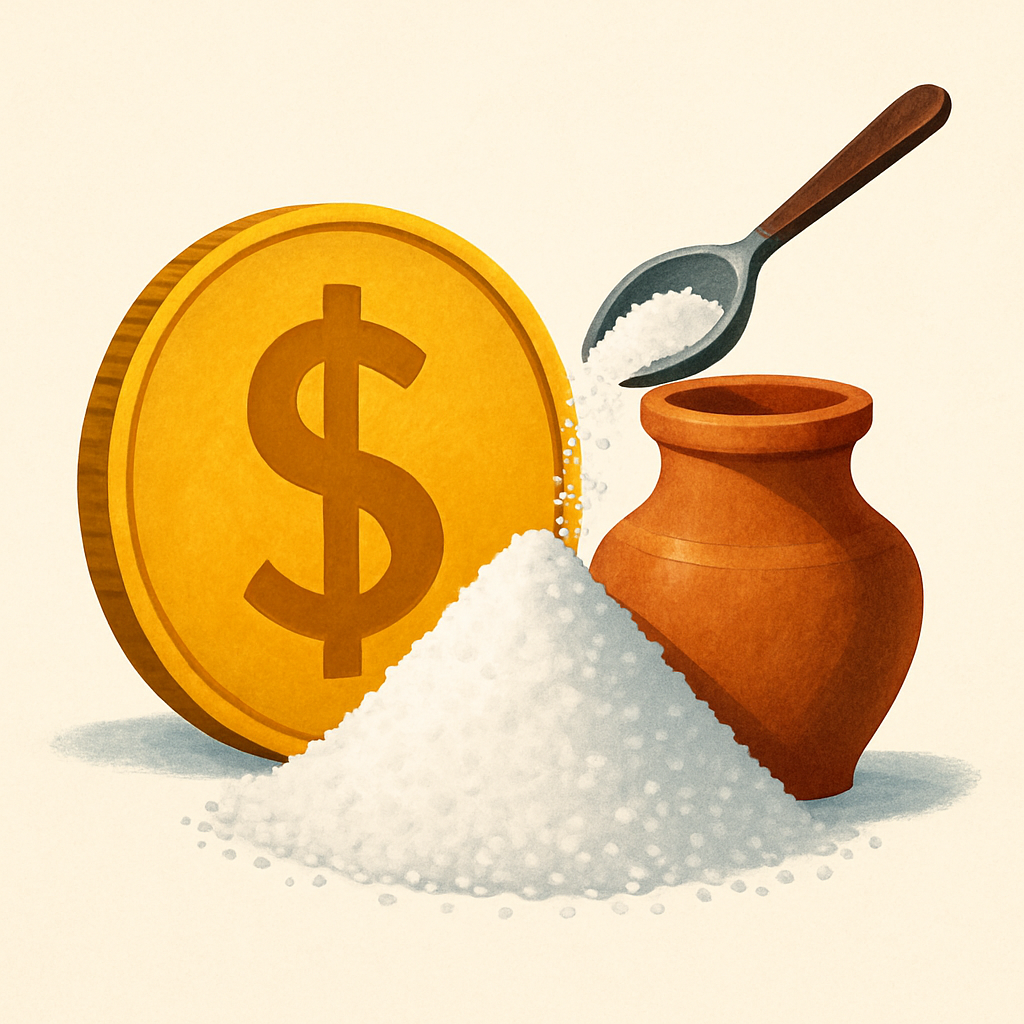
The word salary comes from the Latin salarium. The connection to salt (sal in Latin) is not disputed. What historians debate is the exact mechanism: whether Roman soldiers were literally paid in salt at some points, or whether the salarium was money specifically allocated for them to buy salt. The distinction matters less than it might seem. Either way, salt was valuable enough that it formed a meaningful unit of compensation. That is a remarkable fact about a substance you can buy in bulk for almost nothing today.
Why Salt Was Worth That Much
Before refrigeration, salt was the primary technology for preserving food. Meat salted correctly could last months or years. Without salt, almost everything you caught or slaughtered had to be eaten within days. Salt was the difference between a good harvest feeding you through winter and starvation. It was not a condiment. It was infrastructure.
Salt was also unevenly distributed. Some regions had abundant sources: coastal areas could evaporate seawater, inland areas near salt deposits had ready supply. Others had none within reach and had to trade for it across considerable distances. Control of salt routes was, for much of history, control of an essential resource, and states and empires that managed salt supplies held a kind of power that is hard to understand from the perspective of a world in which salt is cheap.
Gandhi and the March That Changed Everything
As recently as 1930, salt was at the centre of one of the most significant political acts of the twentieth century. The British colonial government in India held a monopoly on salt production and imposed a tax on it, making it illegal for Indians to collect or produce their own even from coastal areas. Gandhi chose to challenge this as the central act of civil disobedience that would galvanise the independence movement.
The Salt March: 240 miles on foot to the coast at Dandi, followed by the symbolic act of picking up salt from the sea. The British response, arresting over 60,000 people, demonstrated both the political importance of the salt laws and the strategic genius of choosing them as the target. Salt was something every Indian needed, something the British were taxing unjustly, and something cheap enough that the injustice was obvious to everyone.
What Else Salt Gave the Language
The salary connection is the most direct, but salt left marks across English. "Worth his salt" refers to a person worth their pay, from the same Roman root. "Salary" and "sauce" share an etymology (both from sal). "Salad" originally referred to vegetables preserved or dressed with salt. The word "salami" is in the same family. Even "soldier," some etymologists argue, derives from the salt connection, though this one is more contested.
These are not just etymological curiosities. They are traces of the period when salt was so central to daily life that it organised language the way money organises language now. We use financial metaphors for value all the time without noticing them. The Romans used salt metaphors in exactly the same way, for exactly the same reason. It was what everything else was measured against.
Disagree? Say so.
Genuine pushback is welcome. Personal abuse is not.
Related questions