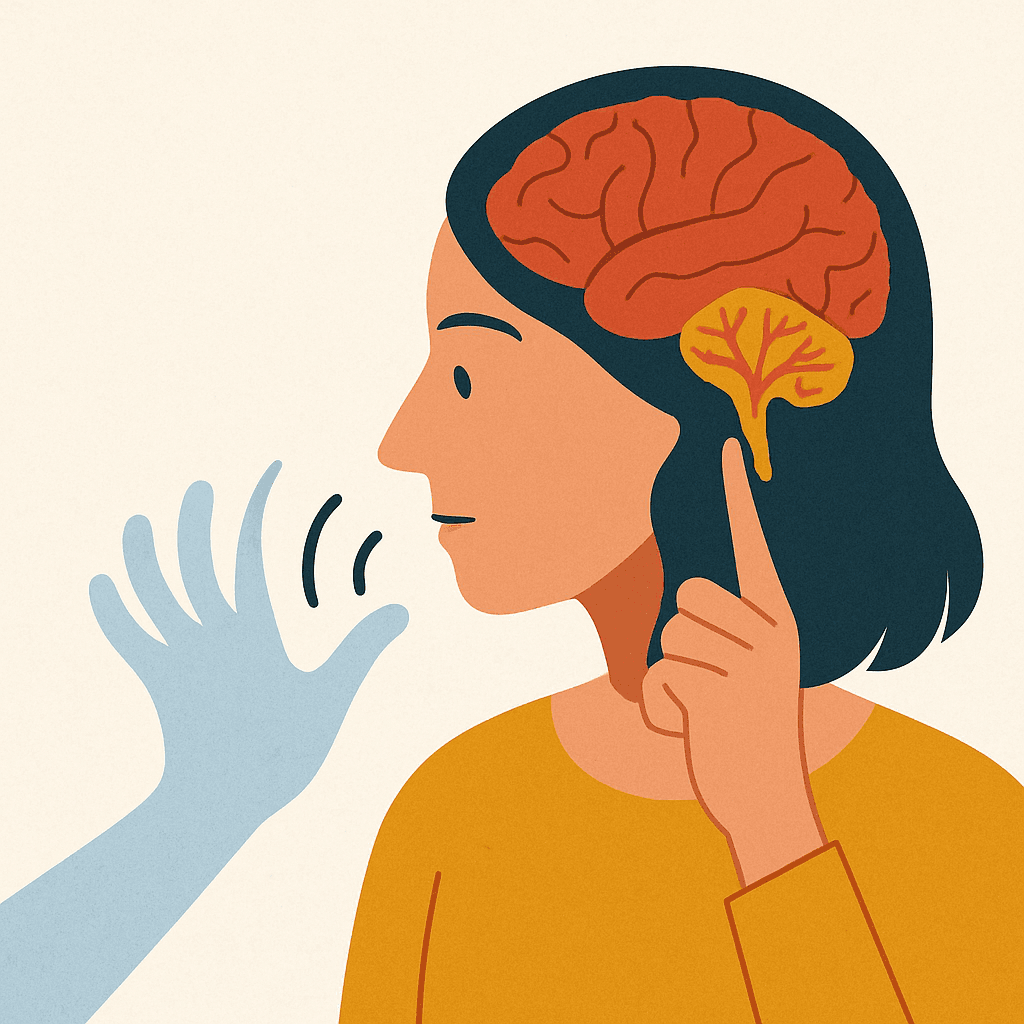
Try it now. Run your fingertips along the sole of your foot, or across your ribs, or under your arm. Nothing. You know it is coming, your fingers are right there, and the sensation is entirely unremarkable. Now imagine someone else doing exactly the same thing. The response is immediate and involuntary. You flinch, curl, laugh. The touch is identical. The response is completely different.
This is not a minor quirk. It is a window into one of the most fundamental things the brain does: distinguishing self from other.
What the Cerebellum Is Doing
The cerebellum, a dense structure at the back of the brain, is responsible for a great deal of movement coordination and timing. One of its less-discussed functions is predicting the sensory consequences of your own actions. Every time you initiate a movement, the cerebellum generates a signal that anticipates what that movement will feel like and uses it to dampen the sensory response.
This is why you can touch your own face without flinching, why you can scratch an itch effectively despite the sensation being far less vivid than being scratched by someone else, and why self-administered tickling produces essentially nothing. The cerebellum has already predicted the sensation and pre-cancelled it before it reaches full conscious awareness.
Why Surprise Is the Whole Point
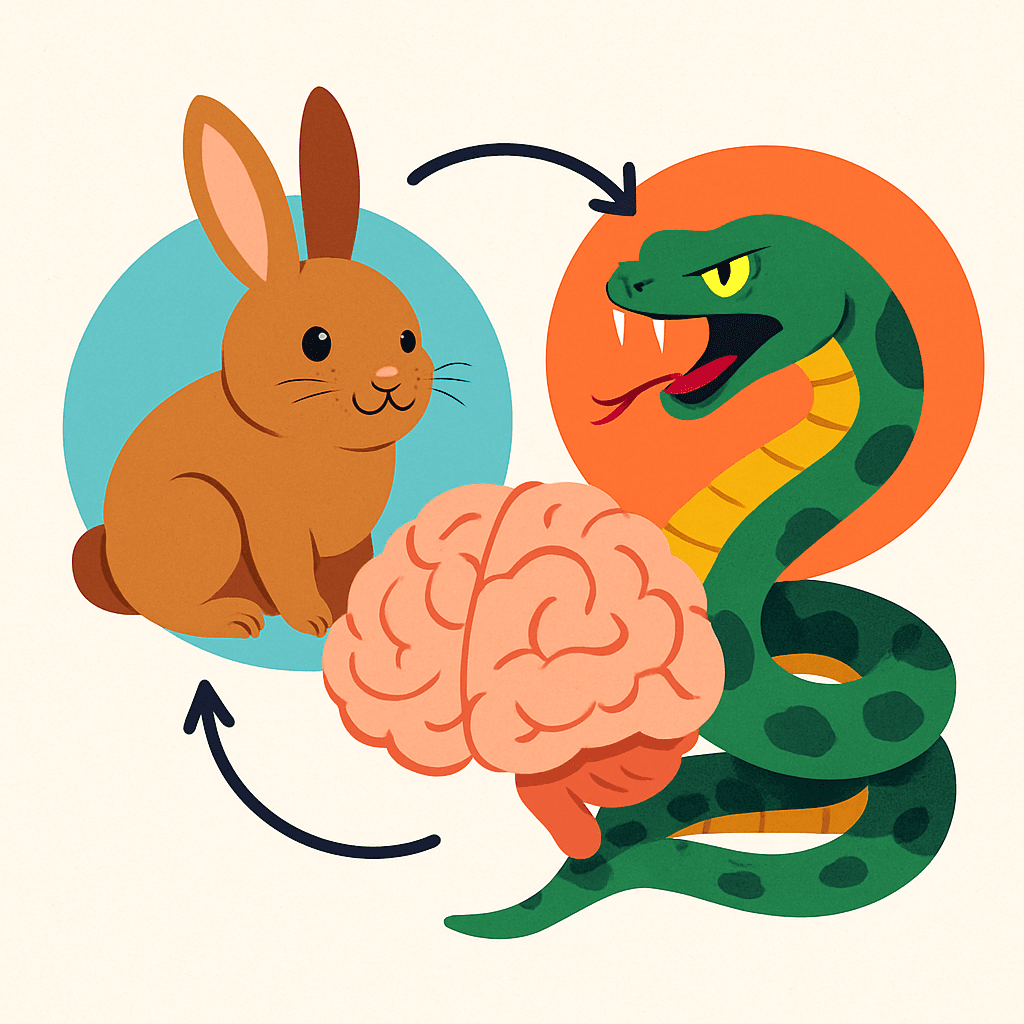
Tickling appears to exist, evolutionarily, as a threat-detection mechanism. The most ticklish parts of the body are also the most vulnerable: the neck, the ribs, the soles of the feet, the armpits. A sensation in these areas that you did not predict could indicate danger. The involuntary response, the flinching, the laughter, the withdrawal, is the body reacting to an unexpected contact in a sensitive area.
When you initiate the contact yourself, there is no unpredictability. The cerebellum's prediction is exact. No threat is registered. No response fires.
The Schizophrenia Finding
Here is where it gets strange. Research by Sarah-Jayne Blakemore and colleagues at University College London found that some people with schizophrenia can tickle themselves. Specifically, those whose symptoms include difficulty distinguishing their own actions from external events.
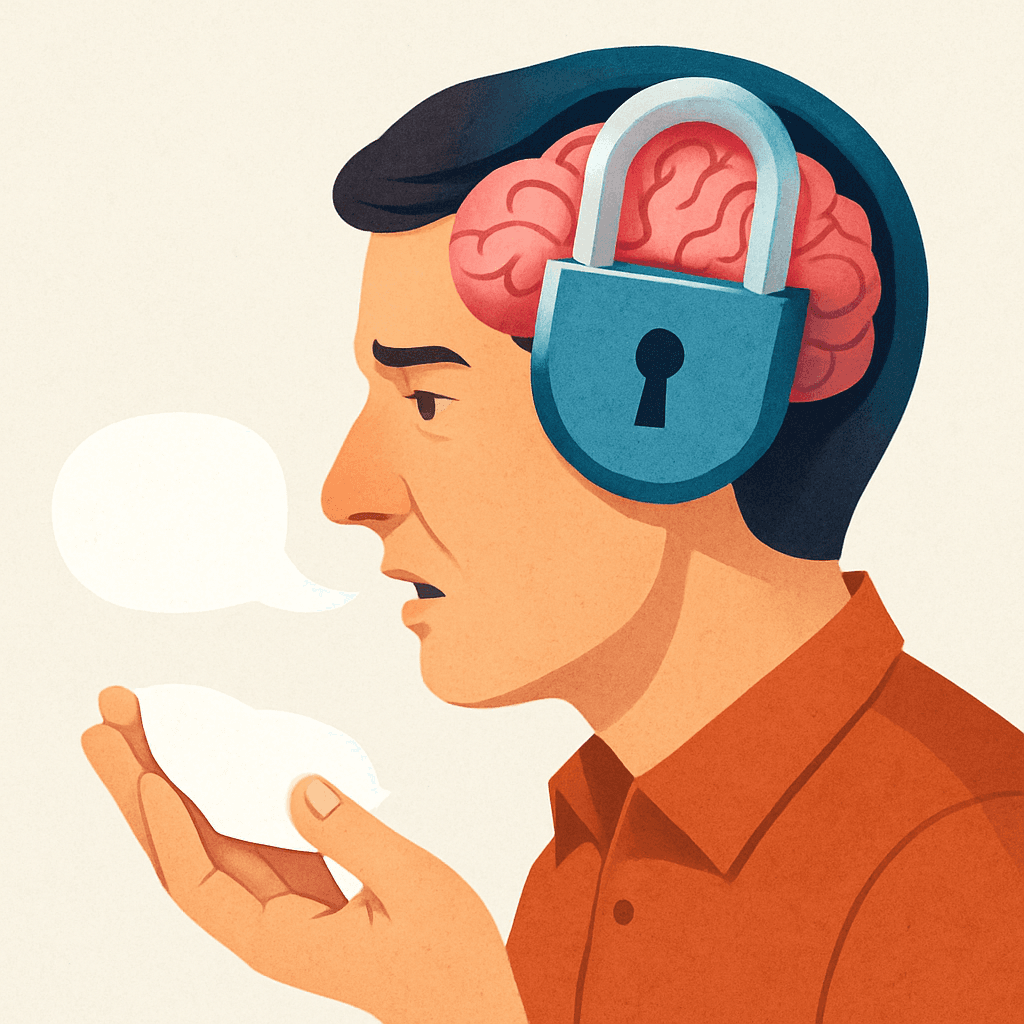
In schizophrenia, the system that generates predictions about self-produced sensations can become disrupted. When that system fails, self-produced touch is no longer reliably distinguished from externally produced touch. The cerebellum does not generate the prediction, the cancellation does not occur, and the tickle registers as if it came from outside.
This finding, while initially just an interesting curiosity, has become important in understanding the neurological basis of symptoms like thought insertion, where patients experience their own thoughts as being placed in their mind by an external source. The same prediction mechanism underlies the sense that your thoughts are your own. When it breaks down, thoughts stop feeling self-generated.
The Broader Implication
The inability to tickle yourself is, in a small way, evidence that you have a self at all. The cerebellum's constant prediction and cancellation of self-produced sensation is one of the mechanisms that distinguishes your experience of your own actions from your experience of the external world. It is a very old piece of biological machinery, and it does its job so well that you never notice it is running.
Until someone asks you to tickle yourself and you realise you cannot.
Disagree? Say so.
Genuine pushback is welcome. Personal abuse is not.
Related questions