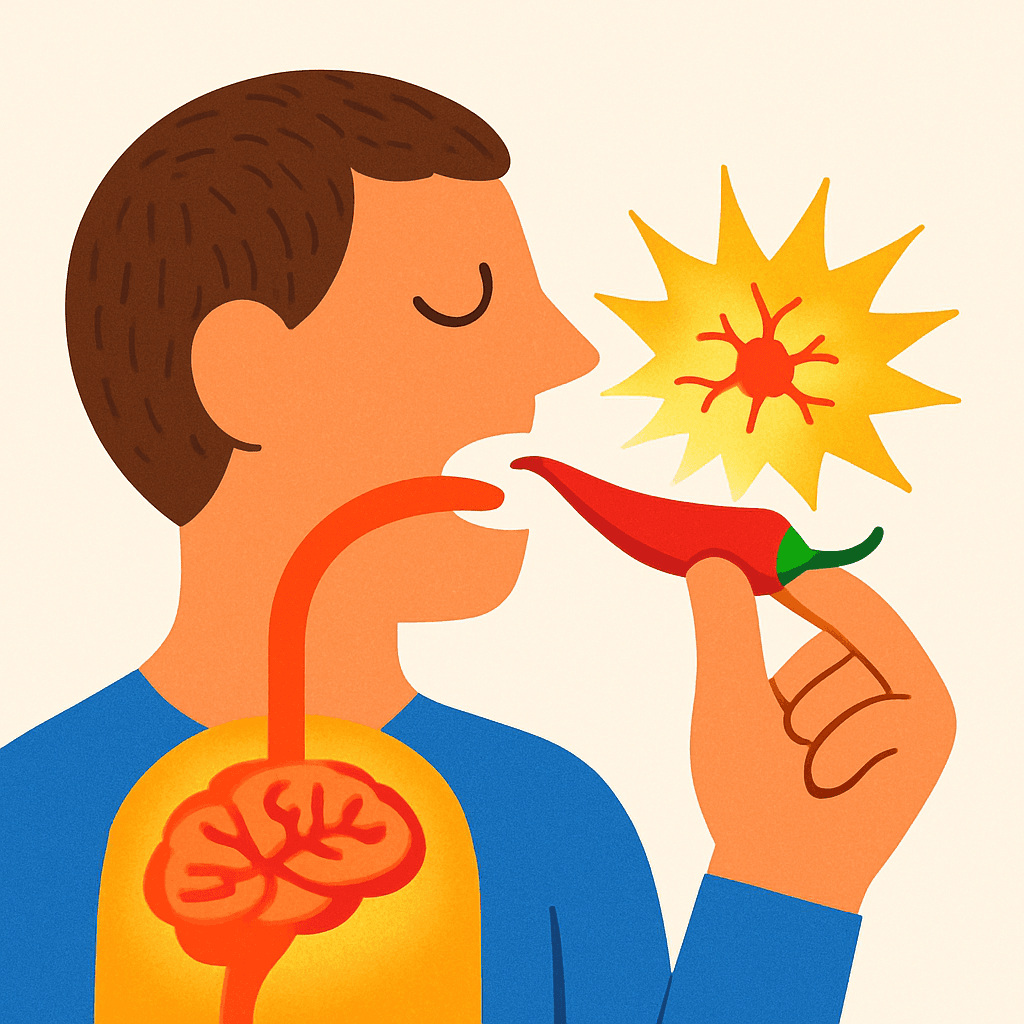
Spicy food does not taste hot. It actually activates pain. The capsaicin in chillies binds to TRPV1 receptors in your mouth, which are the same receptors that respond to genuinely damaging heat. Your brain receives the same signal it would receive if you had put something burning into your mouth. There is no actual tissue damage, but the brain has no way to know that from the receptor signal alone. It responds as if you are being burned.
Given this, the question of why large populations across the world actively seek out spicy food, why people develop preferences for ever-hotter dishes, why "too spicy" gradually becomes "not spicy enough," is a genuinely interesting one.
The Body's Response to Perceived Danger
When capsaicin activates the pain receptors, the body responds the way it responds to any pain signal: it releases endorphins and dopamine. Endorphins are the body's natural painkillers. Dopamine is involved in the anticipation and experience of reward. The combination produces a mild but real euphoria, a rush that follows the burn.
This is the mechanism. Spicy food produces pain. Pain produces the body's pain-relief response. The relief, arriving as a flood of neurochemicals, is pleasurable. You are, in effect, deliberately triggering your own internal pharmacy by eating a chilli.
Why Tolerance Develops
With repeated exposure, the TRPV1 receptors that respond to capsaicin can become desensitised. Regular consumption of spicy food requires progressively more heat to produce the same level of activation. This is tolerance in the same sense as tolerance to any repeated stimulus. It is also why people who grow up with spicy food in their culture often find the levels that non-habituated people find intense relatively mild. Their receptors have adjusted.
Tolerance is not permanent. A few weeks without capsaicin will substantially reverse it. This is also why people who quit spicy food and then return to it after a break often find it unexpectedly intense again.
The Cultural Layer
Biology explains the mechanism but not the full picture. Spicy food cultures tend to cluster in hot climates, and one plausible reason is that capsaicin has antimicrobial properties. In environments where food spoilage is faster and food-borne illness more dangerous, spices including capsaicin may have offered genuine protective benefits. The cultures that developed spicy cuisines may have had real mortality-level reasons to do so.
The love of spicy food is also socially transmitted. Growing up eating hot food, associating it with family meals, celebration, and cultural identity, builds preferences that are not reducible to the pain-endorphin mechanism. The pleasure of a vindaloo or a Sichuan hot pot is not just neurochemical. It is also memory, belonging, and the particular pleasure of eating something that tests you and finding you are up to it.
Disagree? Say so.
Genuine pushback is welcome. Personal abuse is not.
Related questions