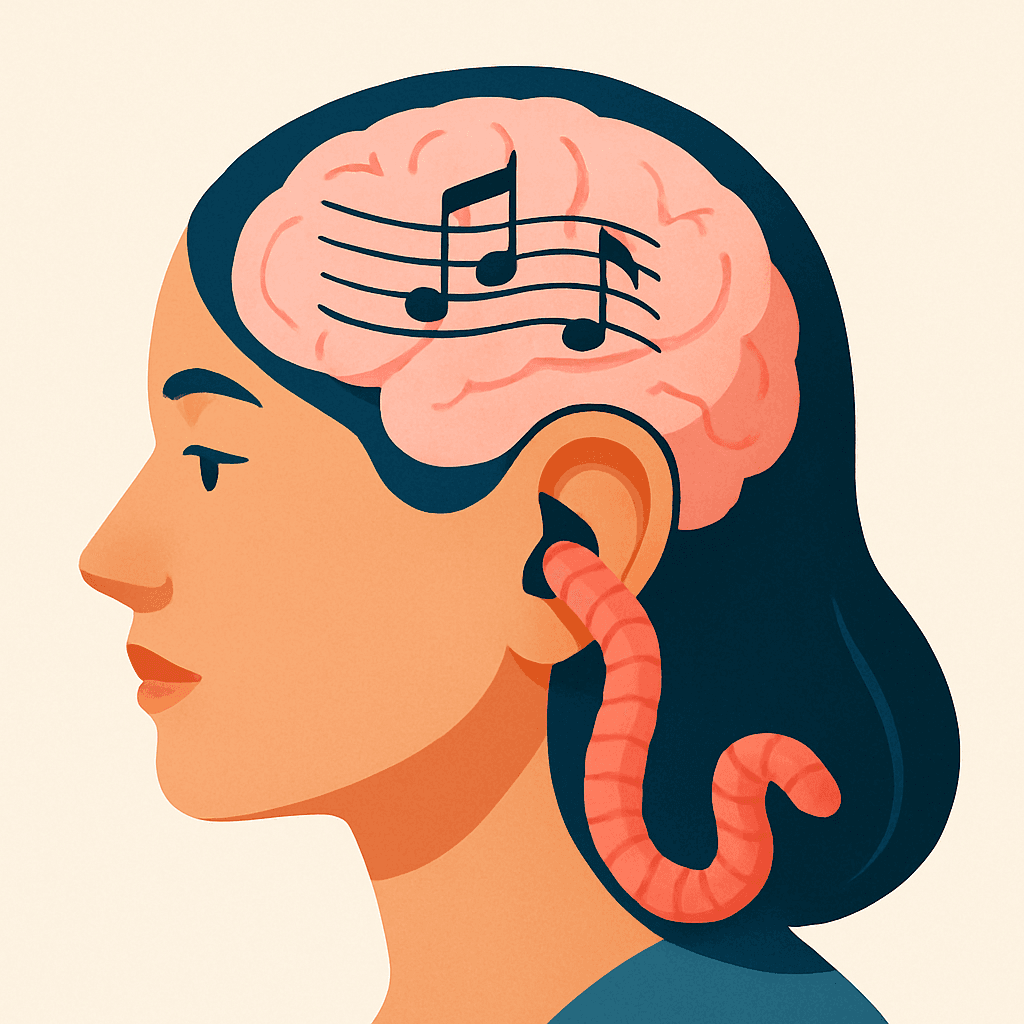
It starts with a fragment. Eight bars of something, a chorus, occasionally just a single repeated phrase. It loops. You try to think about something else and it is still there. You go to make a cup of tea and it follows you to the kitchen. You wake up the next morning and it is already playing. Earworms, as researchers call them, affect roughly 98 percent of people, most of them at least once a week. They are one of the most universal and most irritating features of having a brain.
They are also not random. There is a specific profile of song that gets stuck, and understanding it explains a surprising amount about how musical memory works.
What Makes a Song Sticky
James Kellaris, a marketing professor who has studied earworms extensively, found that certain musical features reliably predict stickiness. Songs that get stuck tend to be fast, repetitive, and melodically simple with one unexpected interval or twist that makes the pattern slightly harder to complete automatically. The twist is crucial. The brain likes patterns it can resolve, and a melody with a small surprise keeps the resolution engine running just a little longer than it wants to.
Simple nursery rhymes do not tend to get stuck because they are too easy. The brain resolves them and moves on. Complex jazz does not tend to get stuck because the patterns are too unpredictable to loop. The sweet spot is a melody that is mostly predictable but contains one small hook that keeps the completion mechanism engaged.
Why Your Brain Keeps Playing It
The Zeigarnik effect, named after the Soviet psychologist Bluma Zeigarnik, describes the brain's tendency to keep unfinished tasks in working memory. Waiters, she found, remembered incomplete orders better than completed ones. The brain flags open loops and keeps returning to them.
An earworm that does not fully resolve is an open loop. The brain keeps coming back to it because it has not finished. This is why earworms are more common when you are stressed, tired, or doing something automatic that does not fully occupy your attention. Your mind has spare processing capacity and a nagging incomplete pattern to resolve.
How to Get Rid of One
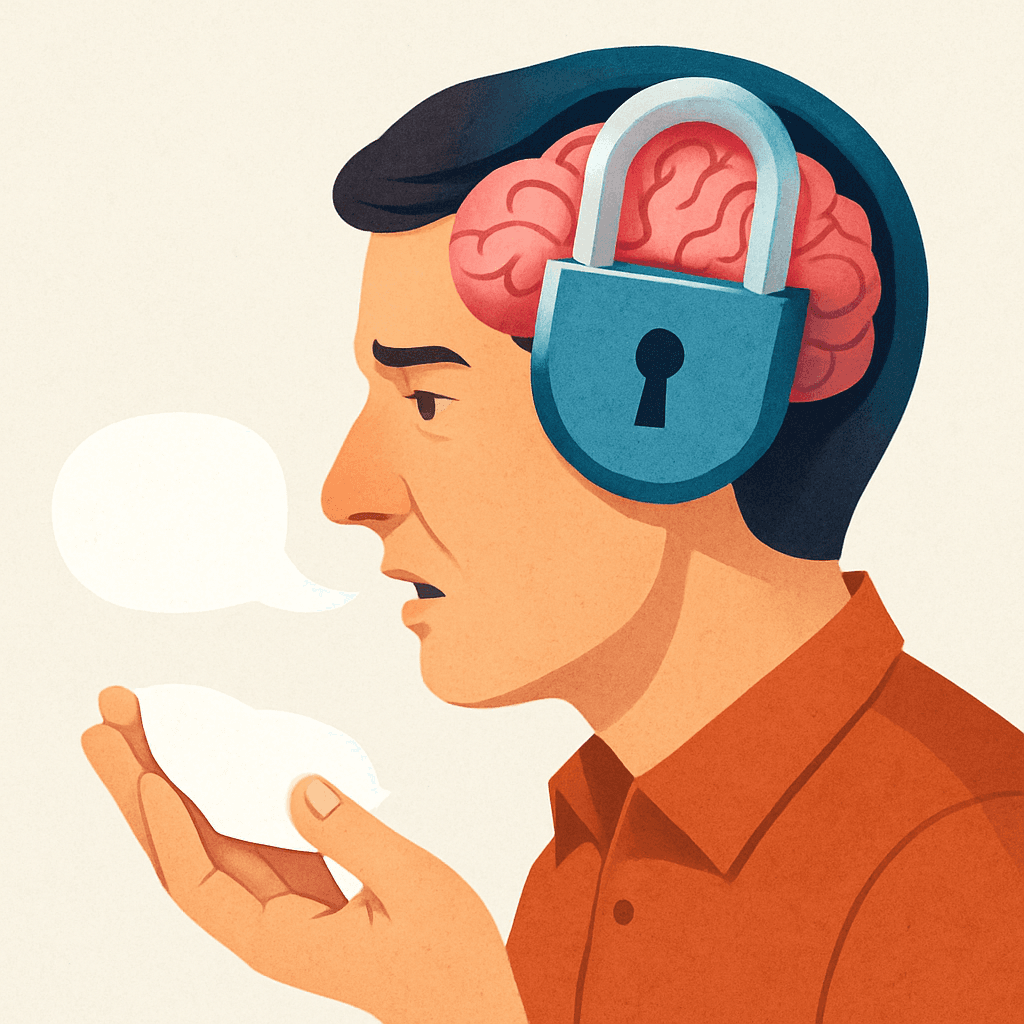
The most counterproductive thing you can do is try to suppress it directly. Research consistently shows that thought suppression backfires: the harder you try not to think of something, the more active that thought becomes.
What actually works, according to research by Elizabeth Hellmuth Margulis and James Kellaris, is completing the loop. Play the song all the way through, to a satisfying ending. The brain has been trying to finish it. Let it finish. Once complete, the open loop closes and the memory system is less likely to keep retrieving it.
If you cannot play the song or do not want it in your head at all, a cognitive puzzle works well. Anagram solving, mental arithmetic, or any task that occupies verbal working memory displaces the loop because both compete for the same mental resource. You cannot hum internally and solve a puzzle simultaneously.
Chewing gum, oddly, also helps. The jaw movements interfere with the motor simulation of singing that underlies most earworms. This is not a myth. It has been tested and the effect is real, if modest.
The brain will find another earworm eventually. It always does. But at least now you know it is trying to finish something.
Disagree? Say so.
Genuine pushback is welcome. Personal abuse is not.
Related questions