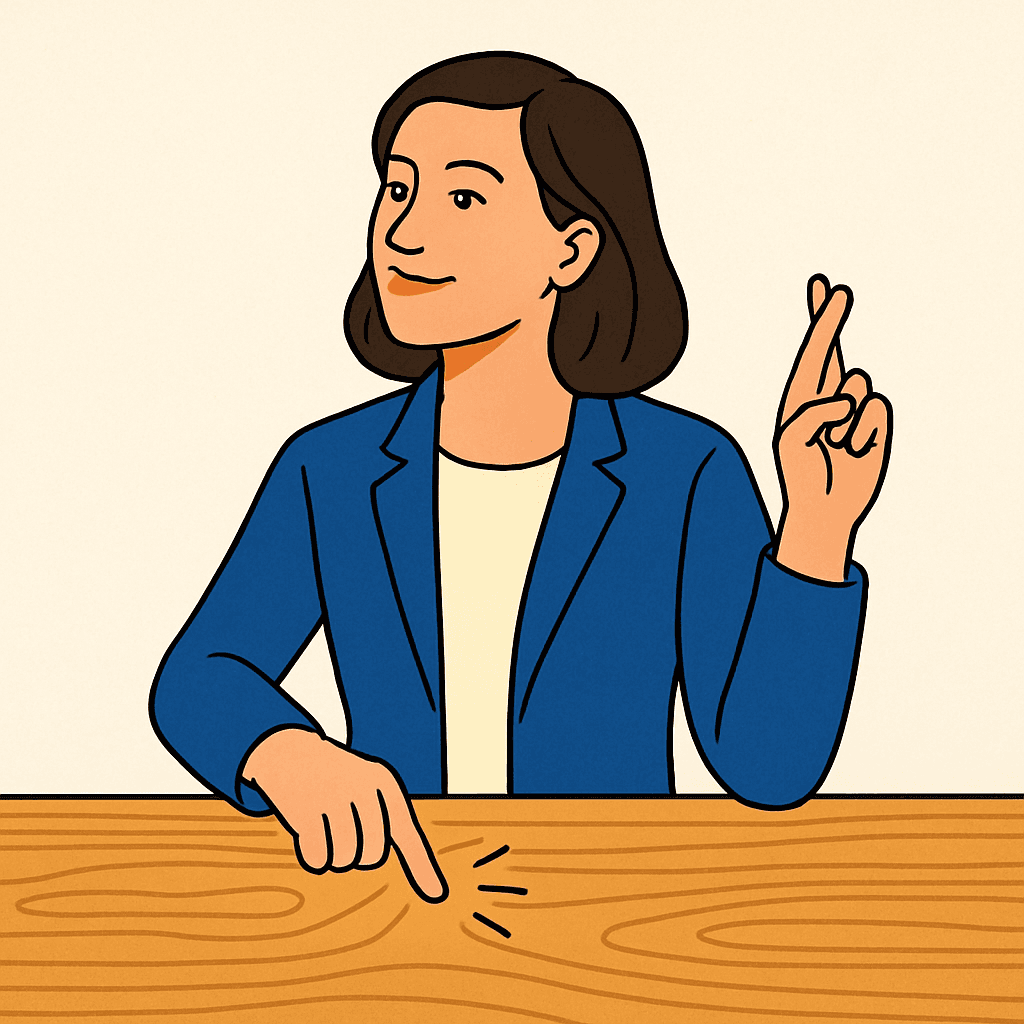
Something good happens, or you say something confident about the future, and almost before you have finished speaking you are reaching for the nearest wooden surface. Knock knock. You do not believe wood has magical properties. You are probably not superstitious in any serious sense. And yet the behaviour persists, reliably, across cultures, across centuries, and across people who would describe themselves as entirely rational.
The phrase "touch wood" in British English, "knock on wood" in American English, appears across essentially all European cultures and has equivalents in many others. It is old. It is widespread. And the question of why it persists is more interesting than it first appears.
Where It Comes From
The most popular theory connects the practice to pre-Christian beliefs across Indo-European cultures that trees were inhabited by spirits or gods. Knocking on a tree was a way of seeking protection from the spirit within, or of warding off evil spirits who might have overheard your boast and been planning to punish it. Some versions of this theory suggest that knocking was a way of checking whether a protective spirit was present. A hollow knock meant a hollow tree, and therefore no spirit. A solid knock suggested an occupied tree.
A separate theory connects it to Christian practice and the wood of the cross, though historians note that the practice predates Christianity in most of the cultures that observe it.
The Psychological Function
Research on superstitious behaviour suggests that rituals of this kind serve a genuine psychological purpose, regardless of whether they have any causal effect on outcomes. They reduce anxiety. Making a gesture that is culturally coded as protective activates a sense of having taken precaution, even when you know intellectually that no precaution has been taken.
Studies on sports rituals and exam superstitions have found that people perform better on tasks after completing their rituals, even tasks where the ritual could have no possible effect. The effect is partly placebo, partly confidence, and partly a reduction in the cognitive load of anxiety. If a gesture makes you feel slightly less exposed, it frees up mental resources that were being used to manage that feeling.
The Counterfactual Aversion
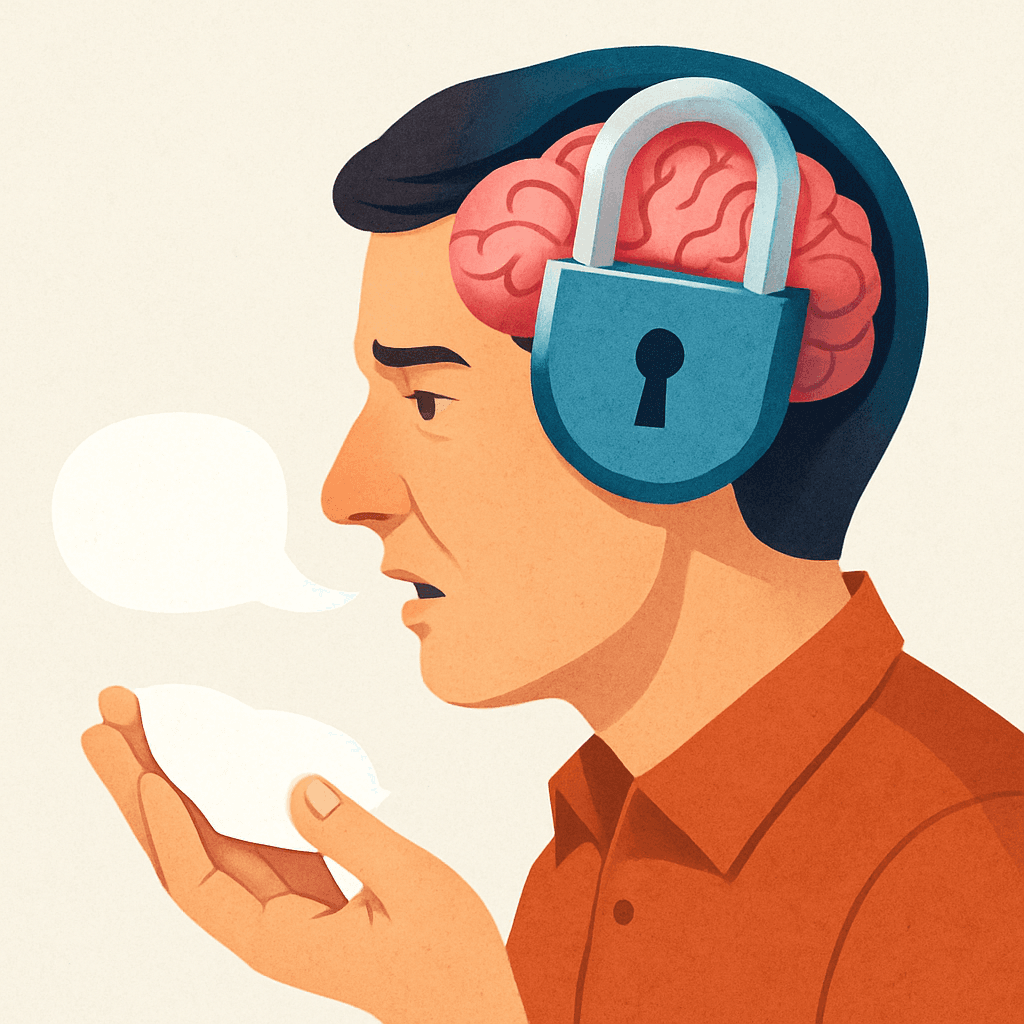
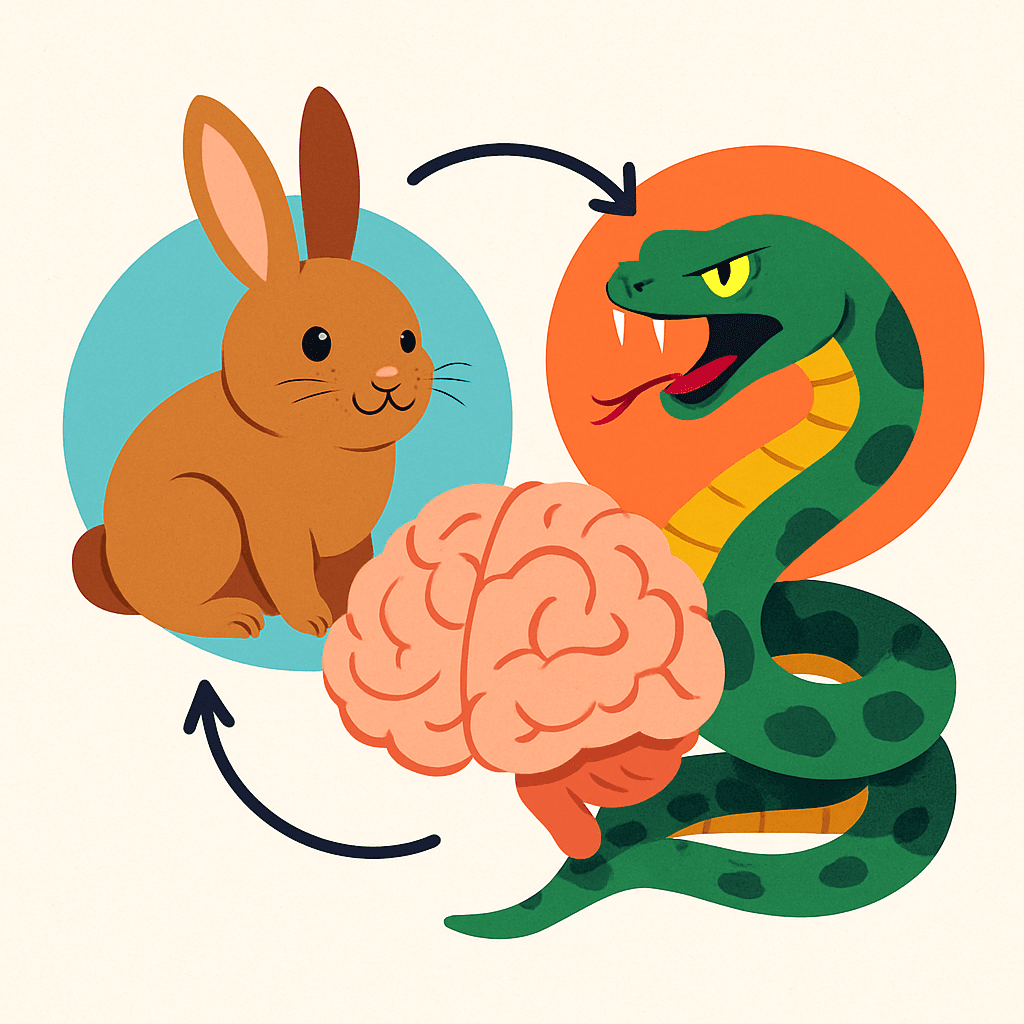
There is also a subtler mechanism at work. Psychologist Jane Risen's research on superstition found that people are particularly reluctant to tempt fate by stating positive outcomes too confidently, because the mind automatically generates the worst-case counterfactual. "I won't get the job" flashes through the mind as soon as you say "I think I'll get the job." Knocking on wood is a gesture that acknowledges the counterfactual, symbolically wards it off, and allows you to continue without the intrusive thought.
You knock on wood not because you think it works, but because the alternative, saying something confident without the gesture, produces a faint, irritating discomfort that the gesture resolves. The knock is the sound of your brain managing its own anxiety in the most efficient way available: a two-second ritual that cost you nothing and made the feeling go away.
Disagree? Say so.
Genuine pushback is welcome. Personal abuse is not.
Related questions