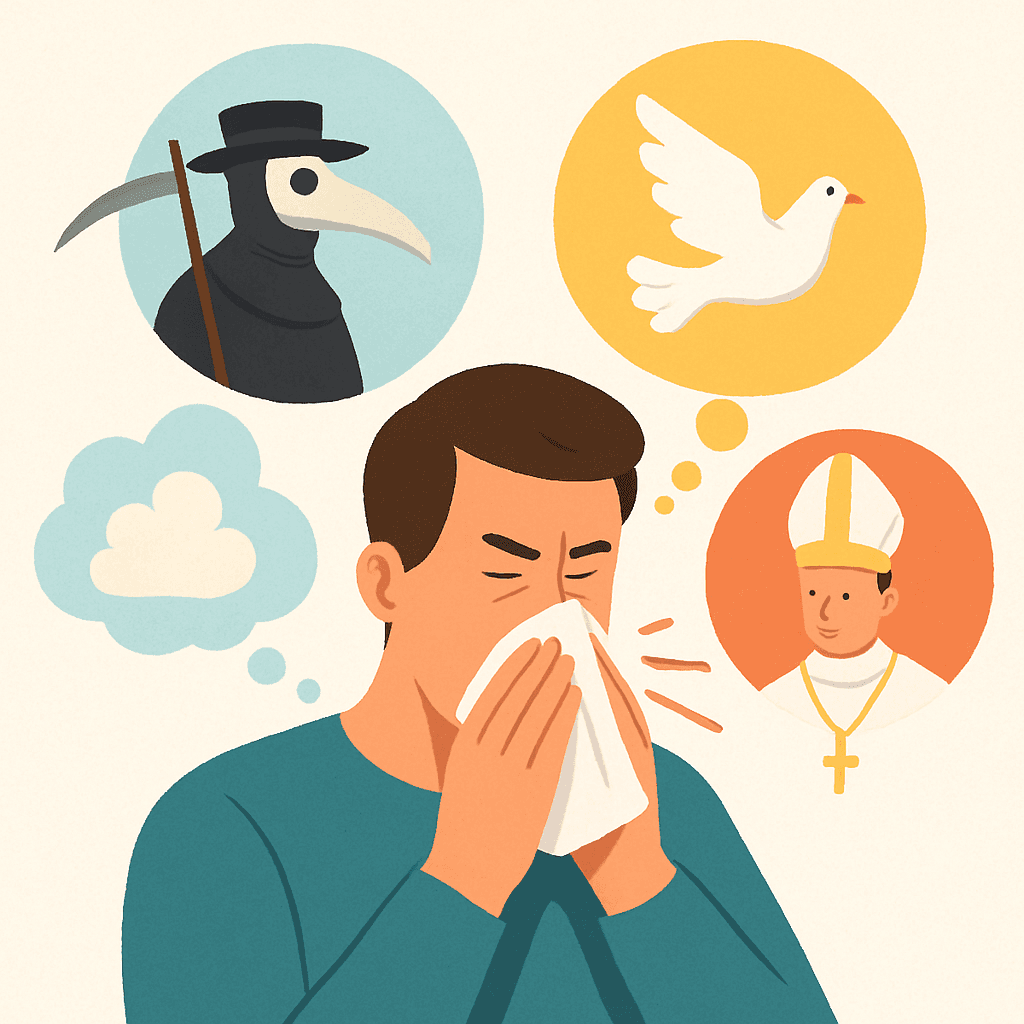
Someone sneezes and you say "bless you" without thinking. If they sneeze again, you say it again, slightly less enthusiastically. A third sneeze and you may start to feel slightly absurd, but you say it anyway. If someone nearby sneezes and does not receive a blessing, there is a faint social awkwardness. The practice is near-universal, near-automatic, and almost entirely unexplained to the people performing it.
Several origin stories compete for the explanation, and the truth is probably that all of them contributed to different versions of the practice in different places and times.
The Plague Theory
The most dramatic origin story connects "bless you" to Pope Gregory I and the plague epidemic of 590 AD. Gregory is said to have ordered prayers and processions as the plague swept through Rome, and to have commanded that anyone who sneezed should be immediately blessed, because sneezing was considered an early symptom of the disease. The blessing was protective rather than merely polite.
This story is widely repeated but poorly documented. Sneezing was associated with various illnesses throughout antiquity, and the association between a sudden sneeze and impending doom made it a natural candidate for protective ritual. Whether Gregory specifically ordered the blessing or whether the story was attached to him later is unclear.
The Soul Escape Theory
A parallel tradition, found across numerous cultures independently, holds that a sneeze could allow the soul to momentarily escape the body, or create an opening for evil spirits to enter. The blessing was a way of wishing protection during this vulnerable moment. Romans said "Jupiter preserve you" or "good health to you" in response to a sneeze. The specifics varied but the protective intent was the same.
Why It Survived
The more interesting question is not where the practice came from but why it persisted long after any of the original reasons stopped being believed. People who say "bless you" in 2025 do not typically believe that sneezing releases the soul, or that plague is the likely diagnosis, or that spirits need to be warded off.
The answer is that social rituals do not require their original justification to persist. They persist because they have become signals of social engagement and care. Saying "bless you" when someone sneezes communicates that you noticed them, that you are attending to their wellbeing, and that you are participating in a shared social script. These are genuinely valuable things to communicate, and the sneeze-blessing has become the established vehicle for communicating them in most English-speaking cultures.
The blessing is no longer really a blessing. It is an acknowledgement. It says: I heard you, I see you, we are in this together. That is worth saying, regardless of what originally prompted the tradition.
Disagree? Say so.
Genuine pushback is welcome. Personal abuse is not.
Related questions