The pay rise arrives. For a few weeks, possibly a few months, there is a genuine lift. Bills feel less oppressive. Small treats feel less fraught. The number on your payslip is higher and you feel, demonstrably, better. Then, gradually, the new salary becomes the baseline. The bills reassert themselves at the new level. The treats become ordinary. Six months later you are thinking about the next pay rise.
This pattern is so consistent and so well-documented that it has a name: hedonic adaptation. And it is one of the most reliably frustrating features of human psychology.
The Adaptation Mechanism
The brain is calibrated for change, not for steady states. It is designed to notice differences, deviations from the expected, new threats and new opportunities. What it is not designed to do is sustain the emotional response to something that has become normal. A pay rise provides a signal of improvement. The brain registers it, adjusts the baseline, and then returns to its default emotional operating level. The signal of improvement has done its job and is no longer needed.
This happens with almost everything positive. The new house, the new relationship, the promotion, the new city. Each brings a genuine and temporary lift, followed by an adjustment of expectations, followed by a return to something close to your original emotional baseline. Psychologists call this baseline the "hedonic setpoint," and research by Brickman and Campbell, and more recently by Lyubomirsky, Sheldon, and Schkade, suggests it is substantially heritable and remarkably stable across life events.
What Money Is Actually Good For
Research by Matthew Killingsworth, building on earlier work by Kahneman and Deaton, has refined the picture considerably. The relationship between income and wellbeing is real but changes character at different levels. At lower income levels, more money reliably reduces stress and improves day-to-day emotional experience because it reduces genuine material hardship. The anxiety of not being able to cover rent or food is not hedonic. It is concrete.
At higher income levels, the relationship becomes more variable and depends significantly on what you spend the money on. Spending on experiences rather than possessions, on other people rather than yourself, and on things that create time (outsourcing tasks you dislike) tend to produce more sustained wellbeing than equivalent spending on goods. The pay rise fades because you spend it on things that adapt. Experiences, by their nature, do not.
The Practical Upshot
None of this suggests that money does not matter. It matters enormously, and the effects of genuine financial insecurity on wellbeing are severe and lasting. But the expectation that a higher salary will produce a lasting improvement in how you feel day to day is consistently disappointed. The salary sets a new baseline. The feeling returns to where it was.
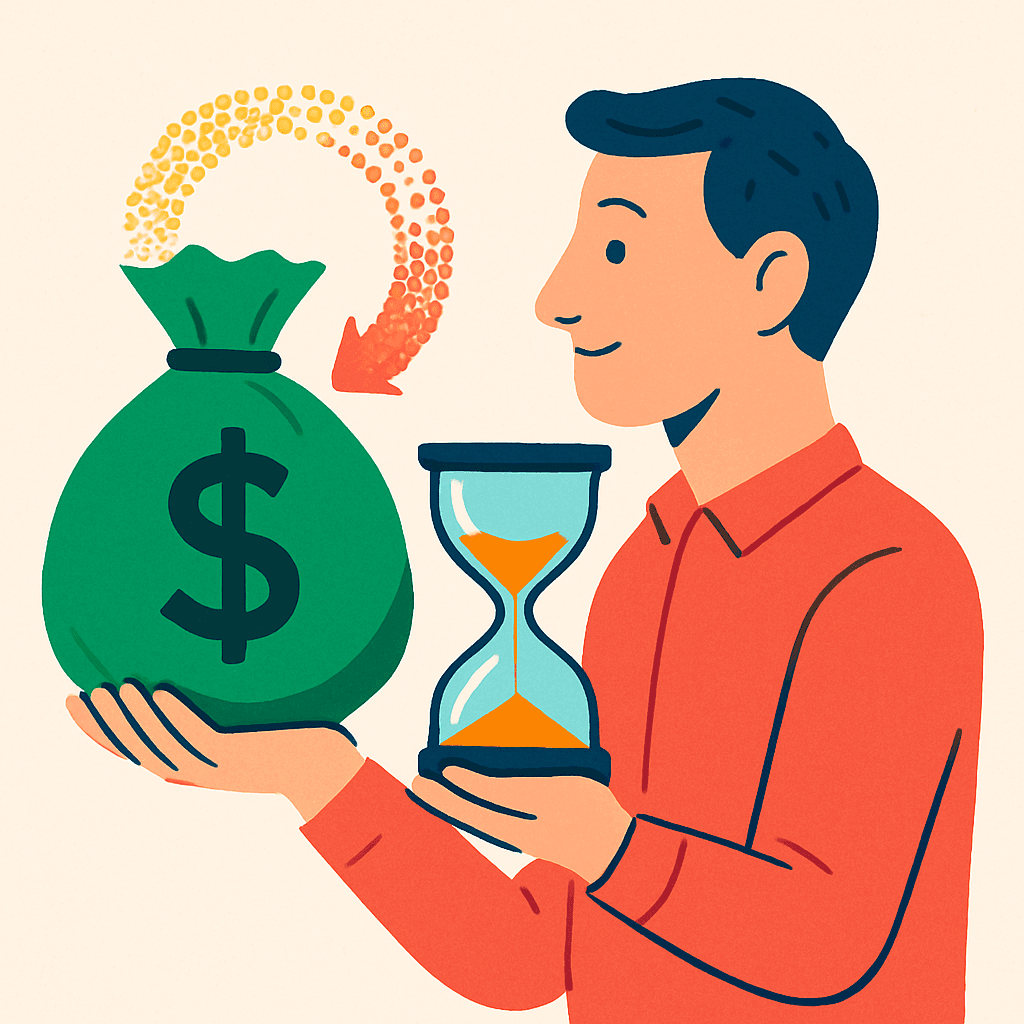
If you want the money to do more sustained good: spend it faster, on fewer things, and on things that involve other people. The one purchase that consistently produces lasting value is time. If you can buy your way out of something you reliably hate doing, the absence of that thing will not adapt away in the same way that a new possession does.
Disagree? Say so.
Genuine pushback is welcome. Personal abuse is not.
Related questions