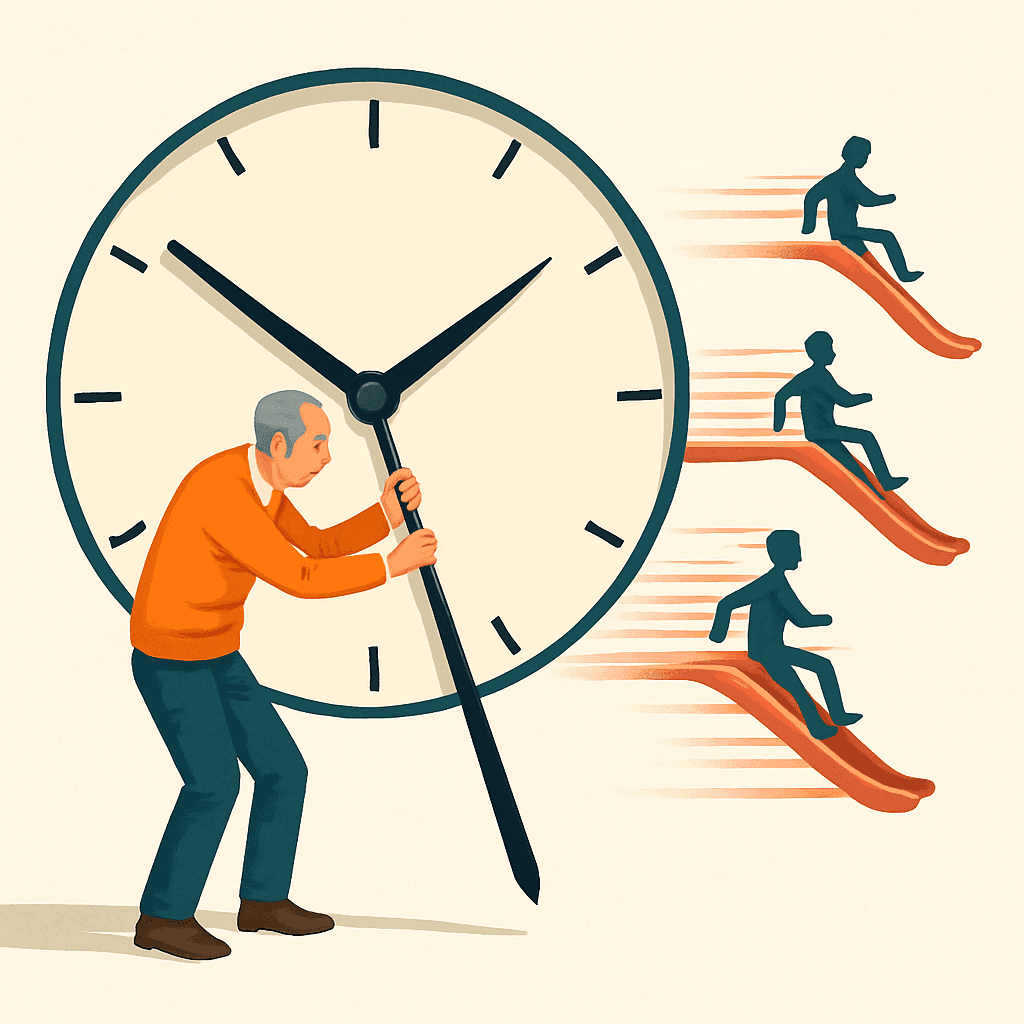
Ask anyone over forty and they will tell you the same thing: the years are getting shorter. Not in any measurable sense, but subjectively, viscerally. January arrives and it already feels like October. The decade that just ended feels like it lasted about three years. You are not imagining this. It is a real and well-documented feature of human time perception, and it gets more pronounced the older you get.
There are at least three serious explanations, and they are not mutually exclusive.
The Ratio Theory
The most intuitive explanation was proposed by the philosopher Paul Janet in 1877 and has been refined ever since. The idea is simple: we perceive time in proportion to how much of our life has already passed. When you are ten years old, one year represents ten percent of your entire existence. It feels long because, relative to what you have experienced, it is long. When you are fifty, that same year represents two percent of your life. The arithmetic is brutal.
The Novelty Theory
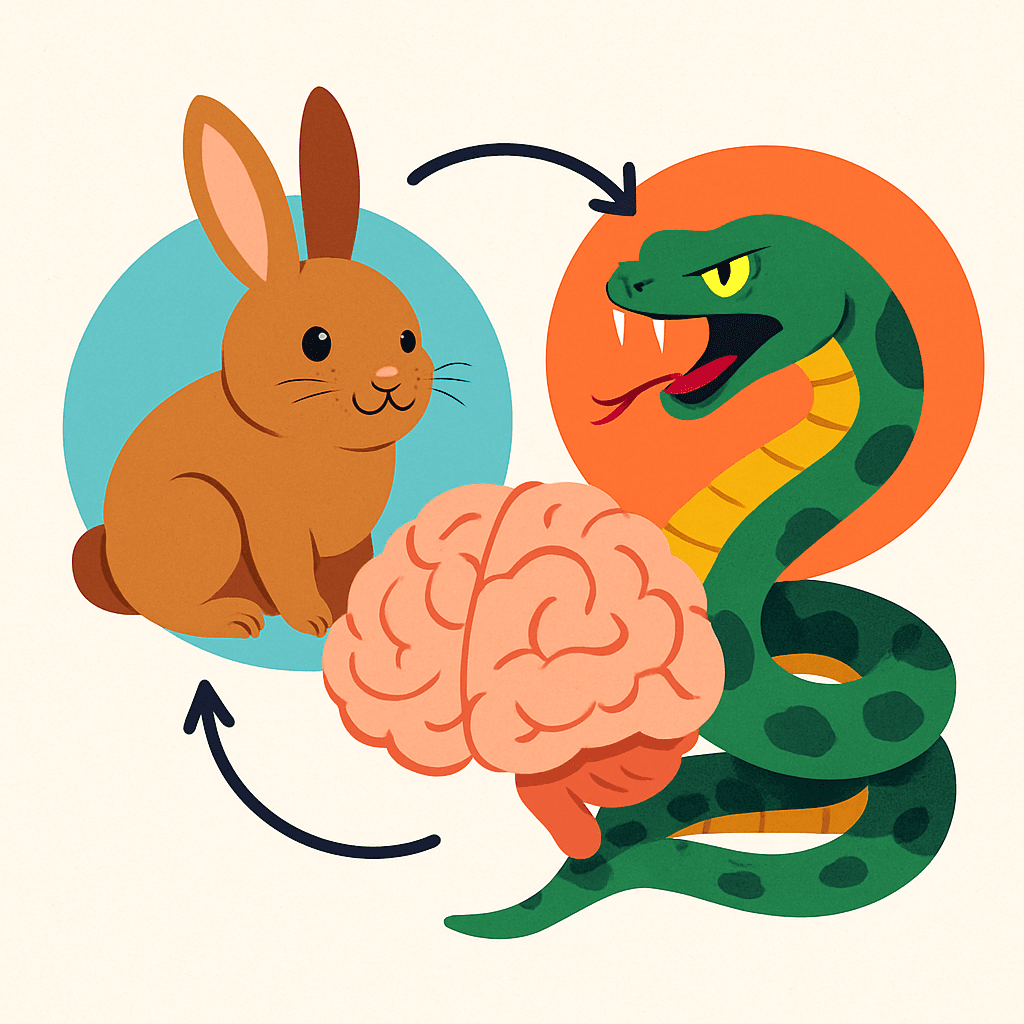
A second explanation is about memory density. When you experience something new, your brain lays down rich, detailed memories. New places, new relationships, new challenges all create distinct mental landmarks. When you look back on that period, the abundance of memories makes it feel long.
Routine does the opposite. A week in which you did exactly what you did last week leaves almost no distinct memories. It was experienced but not really encoded. When you look back, it has collapsed into near-nothing. And adult life, for most people, involves a great deal of routine.
This theory has a practical implication. If you want a year to feel long, fill it with new experiences. Not necessarily dramatic ones. A new route to work, a new book genre, a conversation with someone you would not normally talk to. The brain logs novelty, and logged moments stretch time.
The Dopamine Theory
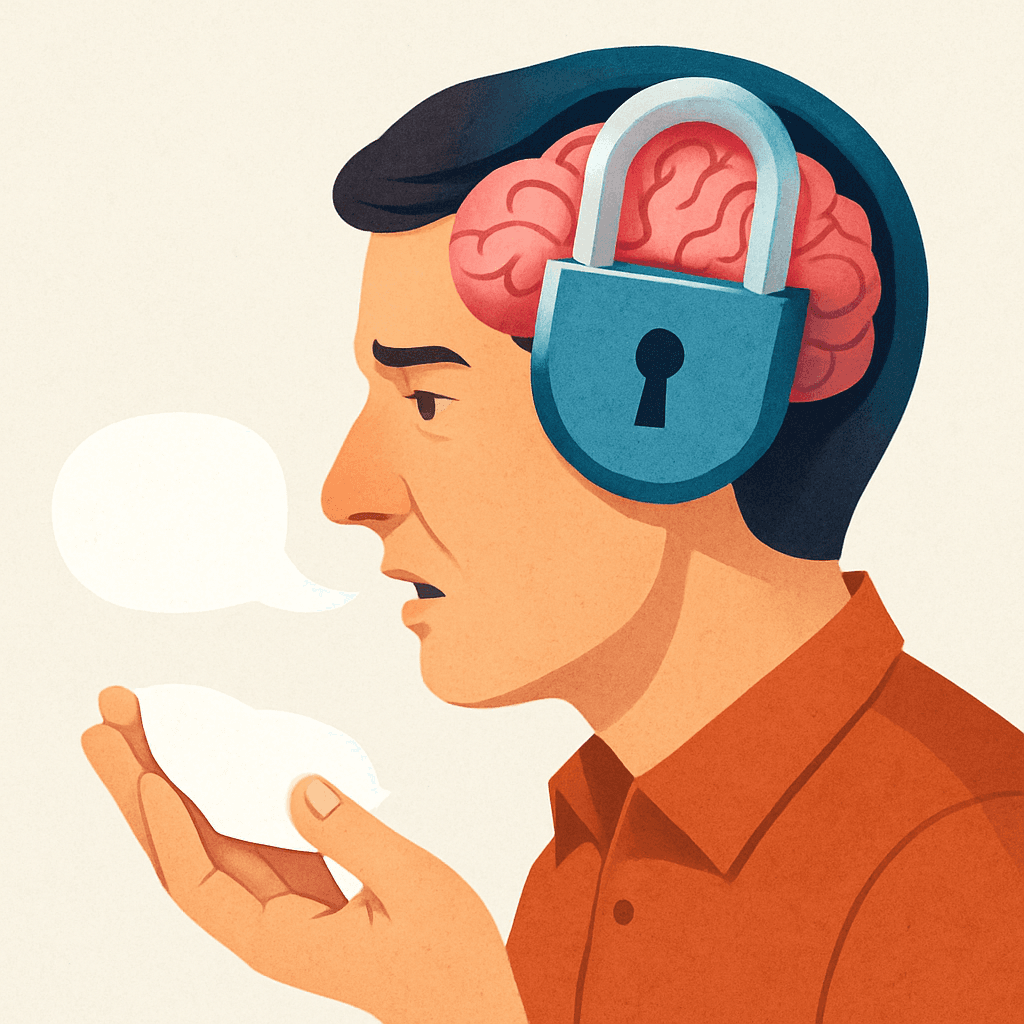
A third explanation is neurochemical. Dopamine plays a role in how the brain tracks time, and dopamine production declines with age. Some research suggests this directly affects our internal clock, making it run faster. The same period of calendar time is processed by a slightly faster internal metronome, so it feels shorter.
This theory is harder to act on directly. You cannot easily top up your dopamine. But it is consistent with the finding that time perception varies within a single life depending on mood and arousal states. Time flies when you are engaged, focused, happy. It drags when you are bored, anxious, or in pain. The brain's chemistry is doing the timekeeping.
The One Practical Takeaway
Of the three theories, the novelty one is the only one that offers genuine leverage. You cannot change the ratio. You cannot easily alter your neurochemistry. But you can, with deliberate effort, seek out new experiences rather than settling into the comfortable grooves that adult life naturally produces.
This is not a wellness prescription. It is just the observable result of how human memory works. A year full of firsts will feel, in retrospect, like more than a year. A year of repetition will feel like a month. The clock runs at the same speed either way. Only the record of it changes.
You cannot slow time. But you can give it more to remember.
Disagree? Say so.
Genuine pushback is welcome. Personal abuse is not.
Related questions